Uvaria afzelii
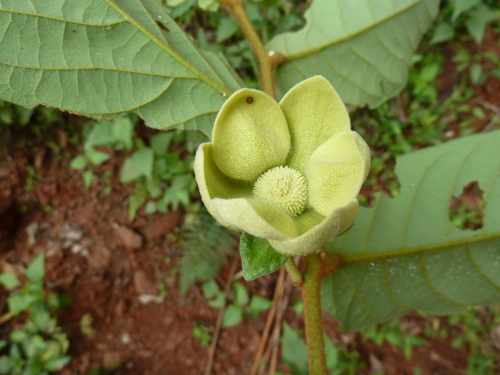
|
|
Uvaria afzelii Common Names: Cluster Pear, Bush Banana, Finger-Root Scientific
Classification Kingdom: Plantae Clade: Tracheophytes Clade: Angiosperms Clade: Magnoliids Order: Magnoliales Family: Annonaceae Genus: Uvaria Species: U. afzelii Binomial Name: Uvaria afzelii Scott-Elliot Synonyms: Uvaria barteri Baker f., Uvaria scabrida Oliv. Morphological Description Uvaria afzelii,
known as Cluster Pear, is a climbing shrub or small tree, typically 3–10 m
tall, occasionally reaching 15 m when supported by other vegetation. It is
characterized by: · Stems: Woody vines, densely covered with short, rust-colored hairs,
scrambling or twining · Leaves: Heart-shaped to ovate, 8–20 cm long, 5–12 cm wide, glossy
dark green, with a velvety texture beneath · Flowers: Fragrant, yellow to orange, 2–4 cm in diameter, with hairy
petals, appearing in clusters from March to June · Fruit: Aggregate, grape-like clusters, 3–8 cm long, green turning
yellow-orange when ripe, with a sweet-sour taste The name
"Uvaria" derives from Latin "uva" (grape), reflecting its
clustered fruit (LinLin et al., 2009). Distribution and Habitat Uvaria afzelii is
native to West and Central Africa, including Nigeria, Cameroon, Ghana, Sierra
Leone, and Côte d’Ivoire. It thrives in: · Habitats: Secondary forests, forest edges, savannah woodlands, and
riverine thickets · Climate: Tropical, with rainfall of 1,200–2,500 mm annually,
temperatures of 22–32°C · Soil Conditions: Well-drained loamy or sandy soils (pH
5.0–6.5), often climbing over shrubs or trees · Elevation: Sea level to 1,200 m Its scrambling habit
aids its spread in disturbed areas (Orwa et al., 2009). Ethnopharmacology Uvaria afzelii
is a medicinal plant native to West and Central Africa, traditionally used for
its wide range of therapeutic properties. Various parts of the plant,
especially the roots, bark, and leaves, are utilized in ethnomedicine for their
antimicrobial, anti-inflammatory, analgesic, antioxidant, and antimalarial
effects. It is commonly used to treat ailments such as fevers, malaria, stomach
disorders, wounds, skin infections, and pain-related conditions. Some
traditional practices also employ the plant in managing reproductive and
urinary tract issues. Phytochemical screenings have revealed the presence of
alkaloids, flavonoids, tannins, saponins, and terpenoids, which are associated
with its biological activities. Though its use is well-established in
traditional healing systems, more pharmacological and clinical studies are
needed to validate its medicinal potential and determine safe therapeutic
dosages. · Antibacterial/Antifungal: Root extracts inhibit Staphylococcus aureus (MIC 62.5 µg/mL) and Candida albicans (MIC 125 µg/mL), used in Nigeria for skin
infections (Okoli & Iroegbu, 2004). · Anti-inflammatory: Leaf decoctions reduce paw edema in rats
(50% at 200 mg/kg), applied in Ghana for arthritis and swellings (Jalil et al.,
2020). · Antioxidant: Leaf extracts show DPPH radical scavenging (IC₅₀ 18.3
µg/mL), used in Cameroon to combat oxidative stress (Ajiboye et al., 2014). · Antimalarial: Stem bark extracts exhibit antiplasmodial activity. · Analgesic: Root infusions relieve pain in mice (ED₅₀ 150 mg/kg), used
in Côte d’Ivoire for headaches and body aches (Jalil et al., 2020). · Gastroprotective: Leaf poultices treat stomach ulcers in
Nigeria. ⚠ Toxicity Profile: No acute toxicity at traditional doses. Phytochemistry The plant’s medicinal
properties stem from a diverse phytochemical profile: · Acetogenins: Uvaricin, squamocin, with antimicrobial and cytotoxic
effects · Flavonoids: Quercetin, kaempferol, providing antioxidant and
anti-inflammatory benefits · Alkaloids: Antimalarial and analgesic agents in roots and bark · Tannins: Astringent compounds aiding wound healing · Essential Oils: Contribute to its fragrance and
antimicrobial properties Additional Uses · Edible Uses: Fruits (rich in vitamin C) eaten raw or juiced in Nigeria;
leaves occasionally cooked as a vegetable (Orwa et al., 2009) · Ecological Uses: Stabilizes soil in forest undergrowth;
supports pollinators with fragrant flowers · Industrial Uses: Fibrous stems used for cordage in rural
Ghana · Cultural Uses: Leaves used in Yoruba rituals for purification References
External Links More Pictures
|
|
| Compounds of Uvaria afzelii | |
| References |
